
Why Choose Us?
Professional Team
Zhengzhou Loreek Machinery Equipment Co.,Ltd. is the professional manufacturer and service provider of filtration and separation equipment.
Overseas Market
Global service since 2012, Zhengzhou Loreek has supplied products and service to over 30 countries and areas excluding China mainland,Southeast Asia, West Asia, South Asia, Northeast Asia, Middle East, Europe, North America, South America , Africa, Oceania and so on.
Complete Range of Products
We mainly supply all kinds of filtration and separation equipment, such as pressure leaf filter, candle filter, press filter, vibrating separator etc.. and oil refining line, screening system and waste recycling line etc. projects.
Rich Experience
Our Core Team has over 30 years production and manufacturing experience in industrial filtration and separation equipment industry. Now we have two production bases located in central China area. Batch production and Integrated services could satisfy all kinds of market needs.
What Is the Liquid Solid Separation
Liquid-solid separation is an effective method to remove contamination and separate solid materials from liquids. The filtration process involves a type of filter media; cartridge, bag, membrane, etc., usually made from a metallic or synthetic material, by which suspended solids are removed from the liquid.
-

Edible Oil Filter Press
Edible Oil filter press is a specialized filtration equipment for oil products. It filters out Add to Inquiry -
Chamber Filter Press
In addition to its simple and inexpensive design, the chamber filter press is also a powerful and Add to Inquiry -
Filter Press Plates
A filter press plate is a component of a filter press machine used in solid-liquid separation Add to Inquiry -
Recessed Chamber Filter Presses
A recessed chamber plate filter press is a common type of filter press equipment used for Add to Inquiry -
Auto Disc Oil Separator For Vegetable Oil
Disc Centrifugel Separator are widely used for degumming, soaping, and washing processes in the Add to Inquiry -
Screw Press Separators
LOREEK centrifugal solid liquid separator is mainly used for washing water of pig house, cattle Add to Inquiry -
Scraping Automatic Self-cleaning Filter
LSCF series scraping self-cleaning filter ( LSCF for short) is the mechanical self-cleaning filter, Add to Inquiry -
Recessed Chamber Filter Presses
LOREEK Recessed Chamber Filter Presses is a new type of excellent airtight filter press. The Add to Inquiry -
Filter Press Centrifugal Pump
LOREEK Filter Press Centrifugal Pump works by centrifugal movement of water caused by impeller Add to Inquiry -
Filter Press Plates
Filter plate is the core part of filter press equipment. Different materials, models and qualities Add to Inquiry -
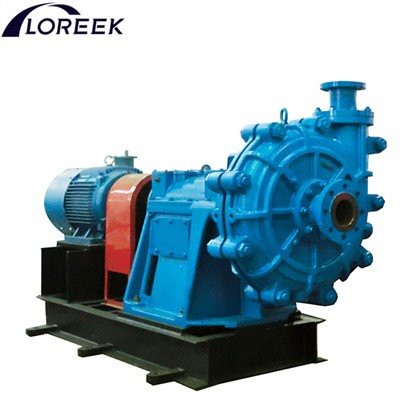
Filter Press Slurry Pump
LOREEK filter press slurry pump with special performance is developed according to advanced fluid Add to Inquiry -
Filter Press Diaphragm Pump
LOREEK Diaphragm pump, also known as control pump, is the main type of actuator, which receives the Add to Inquiry




The Advantages Of Liquid Solid Separation
Liquid solid separation is a key part of manufacturing in the pharmaceutical industry as active ingredients must be purified, contaminant-free, and safe for use. Any contamination in a mixture poses a potential health hazard to operatives throughout pharmaceutical production and downstream in its intended application.
Liquid solid separation is also vital as far as quality assurance is concerned, as appearance and composition of a drug product demands consistency. Other major advantages of liquid solid separation include the following:
● Improved efficiency of washing and isolating solids in complex synthesis processes
● Improved safety measures
● Isolating active ingredients
● Regulatory compliance
What Liquid Solid Separation Methods Are Used in Pharmaceutical Production
The primary liquid solid separation paradigms used in pharmaceutical preparation are filtration, centrifugation, and evaporation. Within each is distinct methods, and there is often significant overlap between the different techniques in order to yield specific results.
Active pharmaceutical ingredients (APIs) are often precipitated from a solution prior to a more robust method like depth or membrane filtration or even filtering centrifugation. Multiple liquid solid separation methods are generally used to isolate products in a sequence; thus, product transfer is an important consideration to bear in mind.
Several liquid solid separation methods are used in the pharmaceutical industry depending on the phases required for the desired product.
● Centrifuge
Centrifuges can be used in several applications, and the user must decide when they are most suitable. A rotor and centrifugal force are used to separate liquids of different densities and a solid from each other, such as water, oil and sediment. Different types of centrifuges are available based on size, speed and the intended application, but they are commonly used in biochemistry, cellular and molecular biology.
● Depth Filter
Depth filters are used to capture and remove particles, often referred to as contamination, from a liquid phase. It is a cost-effective method and can hold a large amount of solids before they need to be cleaned or replaced. In the pharmaceutical industry, depth filters are used for bioprocessing and cell harvesting as they retain a high quantity of particles without reducing the efficiency of the separation process.
● Rotary Evaporator
Rotary evaporators are used for removing solvents from a sample via a method of evaporation. They are ideal for solvents with low boiling points. They offer an accurate, more efficient separation technique as they increase a sample's surface area, which enables a solvent to be separated quickly.
● Single Mesh Filter
Single mesh filters are used in liquid solid separation to remove larger particles from a sample and are common in pharmaceutical and biochemical laboratory applications where contaminants and impurities must be removed.
What Is the Process of Liquid Solid Separation
Filteration: The process of separating suspended solid matter from a liquid, by causing the latter to pass through the pores of a filter is called filtration.
Separation by Sedimentation and Decantation: The process of settling down heavy insoluble particles in a mixture of water is called sedimentation. the process of transferring clear liquid after sedimentation, without disturbing the sediment (insoluble heavy particle) is called decantation.
Evaporation: The process of obtaining a non-volatile soluble solid from its solution by allowing the liquid component to vaporize is called evaporation.
Distillation: The process of heating the solution to form a vapour of the liquid phase and then cooling the vapour to get the liquid again is called distillation.
Centrifugation
The process of separating the suspended particles of a substance from a liquid in a mixture by churning them at high speed is called centrifugation.
Chromatography
It is a method based on the difference in the rate of adsorption of various components of a mixture on a suitable adsorbent. adsorption is the process of the accumulation of substances on the surface of a solid medium. a common adsorbent is a strip of filter paper of good quality.
Crystallisation
The process of cooling a hot, concentrated solution of a substance to obtain crystals is called crystallization.
Particle Size in Liquid Solid Separation
When developing and implementing liquid solid separation methodology, there are a few parameters regarding particle size that you must take into consideration. These parameters include the size of your particles, particle agglomeration, and particle size distribution.
01
Particle Size
When classifying particle size, a good rule of thumb to follow is particles larger than 50 microns are considered big, particles 10 micron down to 1 micron are considered small, and particles smaller than 1 micron are considered fine. To that end, the smaller a particle gets, the harder it becomes to filter.
02
Particle Agglomeration
During liquid solid separation, the size of agglomerated particles plays a more critical role than the size of individual particles. Individual small particles are more difficult to filter than small particles that form an agglomerate.
03
Particle Size Distribution
The purpose of a particle size distribution curve is to determine how many fine particles are mixed with larger ones and if the particle sizes are, for the most part, uniform. Material with a larger distribution curve has the tendency to form tighter filter cakes, is harder to filter, and has an increased chance of plugging the filter medium faster.

Common Techniques For Liquid Solid Separation
Liquid solid separation involves separating particulate solids from liquids in which they are suspended. This process is essential in engineering and environmental disciplines, allowing for the recycling of water and recovery of valuable solid materials. Methods range from simple filtration to complex systems using chemical processes. Here's a look at some common techniques:
Filtration
Involves passing a mixture through a filter medium that traps solid particles.
Centrifugation
Utilizes centrifugal force to separate solids based on density differences.
Gravity settling
Relies on the natural settling of solids under the influence of gravity.
Flotation
Employs bubbles to buoy particles to the surface for removal.
Common Techniques for Liquid Solid Separation
Environmental Control:
In wastewater treatment plants, liquid solid separation removes pollutants before discharge, ensuring compliance with environmental regulations and safeguarding ecosystems.
Chemical Industry:
From product purification to catalyst recovery and wastewater treatment, liquid solid separation is integral to various processes in the chemical industry, ensuring product quality and regulatory compliance.
Food Production:
In food processing, liquid solid separation techniques are employed in beverage clarification, oil extraction, and other stages, ensuring product safety and extending shelf life.
Mining and Mineral Processing:
In mining operations, liquid solid separation facilitates the recovery of valuable minerals from ore slurries, optimizing resource utilization and minimizing environmental impact.
Filter Media for Liquid Solid Separation
Two main types of filter exist: media synthetic cloth or metal. The choice of media depends on filtration removal efficiency, process requirements, filter technology, characteristics of the solids and liquids, and other parameters such as chemical and thermal resistance.
With synthetic cloths, the materials can be polyester; nylon; polypropylene; PVDF (Kynar); PEEK; or fluoropolymers, such as ETFE, PTFE, E-CTFE, carbonized or polyester. The media can then be segmented by the degree of openness. Plain, square weaves have visible or nearly visible weave openings normally larger than 200 microns and closed weave filter cloth from 1 to 200 microns. For the weave itself, warp is the lengthwise of longitudinal thread in a roll, while weft is the transverse thread.
Monofilaments are the most concise and regular fabrics. The singular strand threads are capable of exact detail. They wear well, and solids are less likely to adhere. They are easier to clean and less likely to blind. The surface of the threads is less coarse, or more smooth and polished. Multifilament fabrics are fine strands twisted together into threads. The threads are coarse and have mild elasticity.
Multifilaments are harder to clean and can sometimes trap solids. Filter media can also be both mono- and multifilament.
Different specifications pertain for open area, thread size and pore sizes. Percentages are given that indicate the relationship between the total open area of the mesh and the area that is covered by the threads themselves. A greater percentage of open area permits higher filtration rates. A greater thread size has more strength, but the percentage of open area in the total mesh is diminished. The actual number of threads per square inch of fabric is always the same.
Liquid Solid Separation Methods and Equipment Selection
Means of liquid solid separation (mechanical dewatering): Filtration, centrifugation and reverse osmosis.
Spiral Classifier
Spiral classifier combines sand washing, grading and dewatering. And according to the relative height of overflow weir, spiral classifier can be divided into three types: High weir type (overflow weir higher than lower bearing), sunken type (overflow water surface submerged spiral) and low weir type (overflow weir lower than lower bearing). Additional, according to the number of its spiral shaft can be divided into single spiral, double spiral classifier.
When spiral classifiers for sand washing and dewatering, the production capacity is generally calculated according to the amount of sand returned, and the control particle size and allowable feed flow rate are checked according to the overflow speed.
Hydrocyclone
Hydrocyclone is a type of classifier that is for the fines classification and dewatering by centrifugal force. The overflow particle is generally used for concentrated slurry and recovered fine sand, and the moisture content of sand after dehydration by hydrocyclone is about 20-26%.
The hydrocyclone specifications are determined by the production capacity and overflow particle size. When the production capacity is large and the overflow particle size is coarse, a large cyclone should be used. If the production capacity is large and the overflow particle size is small, a small cyclone group can be used. The classification efficiency of hydrocyclone is about 30~50%.
Filter Press
Filter press is generally used as the end mechanical treatment mode for liquid solid separation in the waste water treatment of sand and gravel system. The material is filtered by pressure, especially for the separation of slime, which has its unique superiority. Filter press can be divided into three types: Plate ans frame filter press, chamber filter press and belt filter press.
Basic principle: Filter press is a filter that combines a plurality of filter plates and filter frames to form filter chambers and uses pressure as a filter driving force. The mixed liquid flows through filter medium (filter cloth), the solid stays on filter cloth, and gradually builds up on the filter cloth to form filter cake. And filtrate portion was permeated through the filter cloth to become a solid-free supernatant.
Compared with other liquid solid separation equipment, filter press can carry out the final dewatering treatment of sludge and stone powder to meet the requirements of loading and transportation, and separate it. The water can be directly discharged or recycled, and the filter cake filtered by filter press has higher solid content and lower water content.
Ceramic Filter
Ceramic filter is also the end mechanical treatment equipment for sludge and stone powder in waste water treatment. This type of equipment can not only carry out the final dewatering treatment of sludge and stone powder to meet the requirements of loading and transportation. At the same time, filter water can also be directly discharged or recycled. Moreover, ceramic filters have the advantages of large processing capacity, simple operation, and continuous operation.
Rotary Centrifuge
Rotary centrifuge uses a centrifugal concentration method. Centrifugal concentration method utilizes the different density between solids in sludge and liquid, and it has has different centrifugal forces in a high-speed rotating centrifuge, so that the two can be separated. Generally, the centrifugal concentrator can work continuously, and the solid content of sludge can reach more than 4%.
Rubber Belt Filter Vacuum Machine
Rubber belt filter vacuum machine is composed of rubber filter belt, vacuum box, driving roller, tape supporting table, feeding hopper, filter cloth adjusting device, driving device, filter cloth washing device, frame and the like, and with the features of continuous operation and continuous filtration. Filtration, washing, slag removal and filter cloth cleaning in the production process can be completed in sequence with the operation of the tape. The moisture content of filtered solid particles can be controlled below 16%, and can be continuously transported to the designated yard by a belt conveyor. The increase of filtration efficiency has effectively controlled the corresponding operating costs, and it has been successfully applied in the treatment of waste water and waste residue in mines and gravel systems.
Our Certificate
Up to now, our company has passed BV Approval. And our products has obtained EU CE, and PED certificates.Excellent products is our brand; Attentive service is our work; Professional technique is our core. Loreek Products is your excellent Option.

Our Factory
Zhengzhou Loreek Machinery Equipment Co.,Ltd. is the professional manufacturer and service provider of filtration and separation equipment. Global service since 2012, Zhengzhou Loreek has supplied products and service to over 30 countries and areas excluding China mainland,Southeast Asia, West Asia, South Asia, Northeast Asia, Middle East, Europe, North America, South America , Africa, Oceania and so on. LOREEK Brand has been one excellent option in this industry.

FAQ
As one of the most professional liquid solid separation manufacturers and suppliers in China, we're featured by good service and competitive price. Please rest assured to buy high quality liquid solid separation for sale here from our factory.
, Horizontal Pressure Leaf Filter