

Recessed Chamber Filter Presses
Zhengzhou Loreek Machinery Equipment Co.,Ltd. is the professional manufacturer and service provider of filtration and separation equipment. Global service since 2012, Zhengzhou Loreek has supplied products and service to over 30 countries and areas excluding China mainland,Southeast Asia, West Asia, South Asia, Northeast Asia, Middle East, Europe, North America, South America , Africa, Oceania and so on. LOREEK Brand has been one excellent option in this industry.
Why Choose Us
Our Factory
Our Core Team has over 30 years production and manufacturing experience in industrial filtration and separation equipment industry. Now we have two production bases located in central China area. Batch production and Integrated services could satisfy all kinds of market needs.
Rich Experience
Our Core Team has over 30 years production and manufacturing experience in industrial filtration and separation equipment industry. Now we have two production bases located in central China area. Batch production and Integrated services could satisfy all kinds of market needs.
Our Certificate
Up to now, our company has passed BV Approval. And our products has obtained EU CE, and PED certificates.Excellent products is our brand; Attentive service is our work; Professional technique is our core. Loreek Products is your excellent Option.
Professional Team
Zhengzhou Loreek Machinery Equipment Co.,Ltd. is the professional manufacturer and service provider of filtration and separation equipment.

The filter cloth of filter press can intercept the bleaching clay and impurities in the oil and form filter cake under the clamping pressure.

Marble Wastewater Filter Press
Loreek brand marble wastewater filter press is used for removing the impurities in the marble waste water.
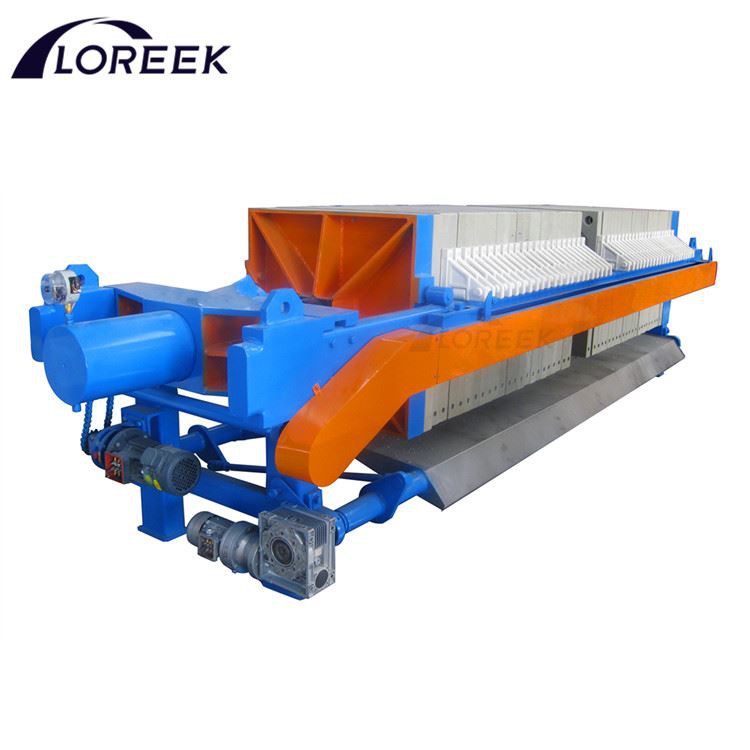
Loreek plate and frame filter press equipment is one kind of traditional solid-liquid separation equipment. Its filter chamber is formed by one plate and one frame.

Tailing Dewatering Press Filter
Our tailing dewatering filter press is a kind of dewatering equipment developed by digesting and absorbing foreign technology.

Mechanical Solid Liquid Separators
Mechanical solid liquid separators is mainly composed of control cabinet, pipeline, body, screen, extruding auger, reduction motor, counterweight, unloading device and other parts.

The sugar syrup filter press uses diatomite and paperboard (or filter cloth) as filter media to filter syrup, carbonated drinks and other liquids with decolorization by activated carbon adsorption.

Loreek sludge treatment filter press is used for sludge dewatering treatment.It mainly consist of frame, filter plate, pressing system and electric control cabinet.

The slurry materials are sent to filter chamber by the pressure of feeding pump and then go into filtrating media (filter cloth) to separate solid and liquid in slurry material.

Palm Kernel Oil Filter Machine
LOREEK Palm Kernel Oil Filter Press Machine are widely used to filter crude kernel oil and crude copra oil extracted from the oil seed expellers to remove impurity and sludge content.
A recessed chamber plate filter press is a common type of filter press equipment used for solid-liquid separation. It is a type of plate and frame filter press and plays an important role in the solid-liquid separation process.
It consists of a series of vertically aligned filter plates and filter cloth, with a series of recesses (also known as chambers) formed between the plates, which form fixed filter press chambers during the filter press process. When the feed liquid is pumped, solid particles are retained by the filter cloth in the filter press chambers between the recesses, while clean liquid flows out through the filter cloth. The recessed filter press is usually used to process high concentrations of suspended solids, such as sludge, mud, etc. It has the advantages of high efficiency, energy saving, and easy operation.
Benefits of Recessed Chamber Filter Presses
High Filtration Efficiency
Recessed chamber filter presses have a high filtration efficiency, which means they can filter out a large amount of impurities and contaminants from the liquid. This leads to a higher quality final product and reduced waste.
Low Maintenance
Recessed chamber filter presses are designed to be low maintenance, which means they require less downtime and are easier to clean and maintain. This leads to reduced costs and increased productivity.
Continuous Operation
Recessed chamber filter presses can operate continuously, which means they can filter large quantities of liquid without the need for interruption. This leads to increased productivity and reduced downtime.
High-speed Separation:
Recessed chamber filter presses are capable of separating particles or liquids at high speeds, making them ideal for applications where speed is critical.
Precise Separation:
Recessed chamber filter presses are capable of separating particles or liquids based on their size and shape, making them ideal for applications where precision is critical.
Types of Recessed Chamber Filter Presses
01
Plate and Frame Filter Press
This is the most common type of recessed chamber filter press. It consists of a series of plates and frames that are stacked together to form a filter chamber. The plates are separated by a frame, which provides a tight seal to prevent any leakage.
02
Membrane Filter Press
This type of filter press uses a membrane instead of a plate and frame. The membrane is designed to filter out particles and impurities from the liquid, and it can be used in a variety of applications, including food and beverage, pharmaceuticals, and biotechnology.
03
Candle Filter Press
This type of filter press uses a cylindrical filter element, which is designed to filter out particles and impurities from the liquid. The candle filter press is commonly used in chemical processing, food and beverage, and wastewater treatment.
How does a Recessed Chamber Filter Press work?
Feed Stage: First, the mixture to be treated is pumped to the feed of the recessed chamber filter press. This mixture is usually a suspension of solid particles suspended in a liquid medium.
Filtering Stage: The feed liquid enters the filter press chamber through the feed line of the filter press. The filter press chamber consists of a series of filter plates and filter cloths that cover the plates to form the filter area. As the feed liquid passes through the filter cloths, solid particles are retained by the filter cloths in the filter press chamber, forming a solid residue layer.
Pressing Stage: When the filter press chamber is filled with the solid residue layer, the filter press begins to apply pressure, usually through a hydraulic system or a mechanical pressure device. The application of pressure causes the liquid in the chamber to be forced through the filter cloth, while the solid particles remain on the cloth to form a solid residue.
Discharge Stage: When the pressure has been applied to a certain level, the filter press stops feeding and starts discharging. The clean liquid is discharged through the filter cloth, while the solid residue is retained in the filter press chamber.
Solids Collection: Solid residue accumulates in the filter press chamber until it needs to be cleaned. When necessary, the operator can open the filter press and remove the solid residue from the filter press chamber.
Through this process, the recessed chamber filter press can effectively separate the solid particles from the liquid in the mixture, thus realizing the purpose of liquid-solid separation. This principle of operation makes the recessed filter press an important piece of equipment in liquid-solid separation applications such as the treatment of wastewater, sludge, chemicals, foodstuffs, and more.
Applications of Recessed Chamber Filter Presses
Recessed chamber filter presses have a wide range of applications in various industries, including:
Chemical Processing
Recessed chamber filter presses are commonly used in chemical processing to separate solid and liquid particles. They are used to filter out impurities and contaminants from chemicals, which helps to improve the quality of the final product.
Food and Beverage
Recessed chamber filter presses are used in the food and beverage industry to filter out impurities and contaminants from food and beverage products. They are commonly used to filter fruit juice, wine, and dairy products.
Pharmaceuticals
Recessed chamber filter presses are used in the pharmaceutical industry to filter out impurities and contaminants from pharmaceutical products. They are commonly used to filter medicines and vaccines.
Wastewater Treatment
Recessed chamber filter presses are used in wastewater treatment to separate solid and liquid particles. They are commonly used to filter out impurities and contaminants from industrial wastewater and domestic wastewater.
Difference Between Plate and Frame Filter Press and Recessed Chamber Filter Presses
There are some obvious differences between plate and frame filter presses and Recessed Chamber Filter Presses in terms of structure and working principle:
Structural difference
Plate and frame filter press: Its filter plate and frame are separated, and the filter media forms a filter cake on the plate, which is then compacted. After the cake is formed, the pressure is applied to the filter material through the filter plate and the filter frame.
Recessed Chamber Filter Presses: The filter plate of the recessed plate filter press has a grooved or recessed structure, which forms a filtrate channel on the surface of the plate while forming the filter cake.
The cake is discharged in this manner
Plate and frame filter press: Cake is discharged manually and usually requires downtime.
Recessed Chamber Filter Presses: After the formation of the filter cake, the filtrate is discharged through the grooves, and the filter cake can be continuously discharged during operation.
Scope of application
Plate and frame filter press: Suitable for processing thin suspensions, which require frequent downtime to clean up the filter cake during processing.
Recessed Chamber Filter Presses: Suitable for processing concentrated suspension, the cake can be discharged continuously during the process, which improves production efficiency.
Recessed Chamber Filter Presses Description of Equipment and Outline of the Test
We are two pilot filter presses used for pilot testing. Both are "sidebar" filter presses with a Electro hydraulic System. The filter press consists of a frame, hydraulic system, filter plates with filter cloths. Other equipment needed for a test includes pumps, and mixing tanks with mixers.
There are two basic filter press configurations: recessed chamber and membrane. Both pilot presses are suitable for recessed chamber testing with choice of which press to use based on the amount of sludge available and number of tests required. A recessed chamber test requires the filter press, feed pump(s), and mixing tank with mixer. A membrane test requires all of the equipment needed for recessed chamber test plus a source of compressed gas for membrane squeeze.
The basic test starts with preparing the sludge or slurry as required for the test and preparing the filter press for the test (installing the correct plates and filter cloth). Once the press and sample are ready the pump is turned on and the press is filled. When the press is filled filtrate will be seen and we start timing and taking filtrate samples. The test is continued until both the low flow and maximum pressure conditions have been reached for filtration. For a recessed chamber test the test is ended. For a membrane test it is continued with the optional cake wash, membrane squeeze, and optional air blow down. Once the test is finished the press is opened and the filter cake is removed and cake samples are taken. During the cake release it is important to note how the cake released and the overall surface condition of the filter cloth. Cake release is normally somewhat better on a larger press but if there is poor release on the test unit the release on the larger unit will be fairly poor.
Recessed Chamber Filter Press Process Description
Air Blowdown
The center feed air blowdown is simple and effective. It doesn't require four discharge eye valves and a procedure. The standard press is equipped with an air inlet valve on the press feed inlet.
Plates
The plates for the RCF Press include gasketed or non-gasketed chamber plates, membrane chamber plates, plates and frames. These plates are lightweight, easy to handle and clean. Other types of porting are also available.
Accepted as superior material by industry worldwide, polypropylene plates are lightweight corrosion resistant and provide long service life. Cost-effective processing and handling are an added benefit of RCF Press plates as they provide effective filtration and liquid/solid separation, and produce low moisture filter cake.
RCF Plate Shifter
A time and labor saving option, the air-powered plate shifter eliminates manual separation of the plates, simplifying the removal of filter cakes from the press. A push button switch with a deadman safety switch controls the plate shifter. The shifter will stop moving plates and return to the non-function position if the operator fails to maintain pressure on the control button. For maximum protection, all operating components are mounted in an enclosed housing.
Expansion Capability
By using a longer skeleton and removable expansion piece, future additional capacity can be constructed for the RCF Press. Because the expansion piece is used to occupy the space required for future plates, skeleton changes in the field are eliminated. Basically, the expansion piece is a tubular extension which fits onto the hydraulic cylinder and attaches to the traveling tailpiece with a high strength universal joint.
Our Factory
Our Core Team has over 30 years production and manufacturing experience in industrial filtration and separation equipment industry. Now we have two production bases located in central China area. Batch production and Integrated services could satisfy all kinds of market needs.


Our Certificate
Up to now, our company has passed BV Approval. And our products has obtained EU CE, and PED certificates.Excellent products is our brand; Attentive service is our work; Professional technique is our core. Loreek Products is your excellent Option.

FAQ
Hot Tags: recessed chamber filter presses, China recessed chamber filter presses suppliers, manufacturers, factory, Manure Dewatering Machine, Horizontal Pressure Leaf Filter, Liquid Solid Separation, Pressure Leaf Filter for Chemical Industry, Sugar Syrup Filter Press, Vibrating Screen Filter Machine
Send Inquiry
